The Ultimate Guide to Cryptocurrency: History, Technology, and the Future of Digital Finance
In the last two decades, the global financial landscape has undergone a seismic shift. The emergence of cryptocurrency has challenged traditional concepts of money, governance, and trust. What started as a niche experiment among a small group of privacy-focused activists has grown into a multi-trillion-dollar industry that is currently reshaping global economies.
But what exactly is cryptocurrency, where did it come from, and why does it matter? This guide provides an in-depth exploration of the digital asset revolution.
What is Cryptocurrency?
At its core, a cryptocurrency is a form of digital or virtual currency that utilizes cryptography for security. Unlike traditional “fiat” currencies—such as the US Dollar, Euro, or Indonesian Rupiah—cryptocurrency does not rely on a central bank or government to issue, manage, or verify transactions.
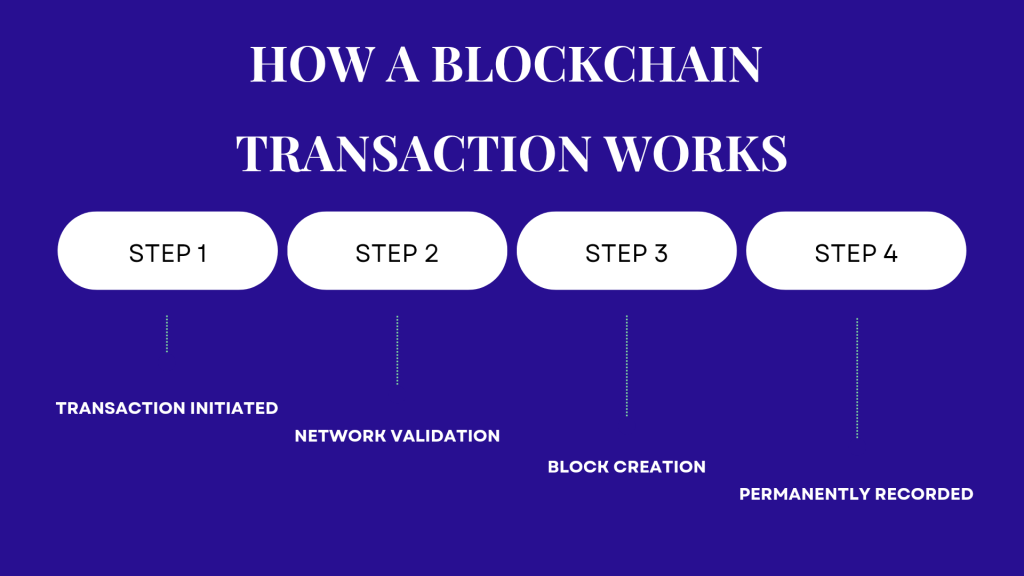
Instead, it operates on a decentralized network of computers. This is made possible through a technology called Blockchain. A blockchain is essentially a public ledger that records all transactions across a network, ensuring that no single entity can alter, censor, or duplicate the data. This provides a level of transparency and immutability that was previously impossible in digital transactions.
| Feature | Fiat Currency | Cryptocurrency |
|---|---|---|
| Issuer | Central Bank / Government | Decentralized (Algorithms) |
| Control | Centralized (Banks) | Peer-to-Peer (Users) |
| Transaction | Requires Intermediaries | Direct / Borderless |
| Nature | Physical & Digital | Purely Digital |
The Pre-History: Before Bitcoin
Many people believe Bitcoin appeared out of thin air, but it was actually the culmination of decades of research. The concept of “digital cash” dates back to the 1980s and 90s, driven by a group known as the Cypherpunks. These activists believed that privacy was a fundamental right in the digital age.
Key figures paved the way:
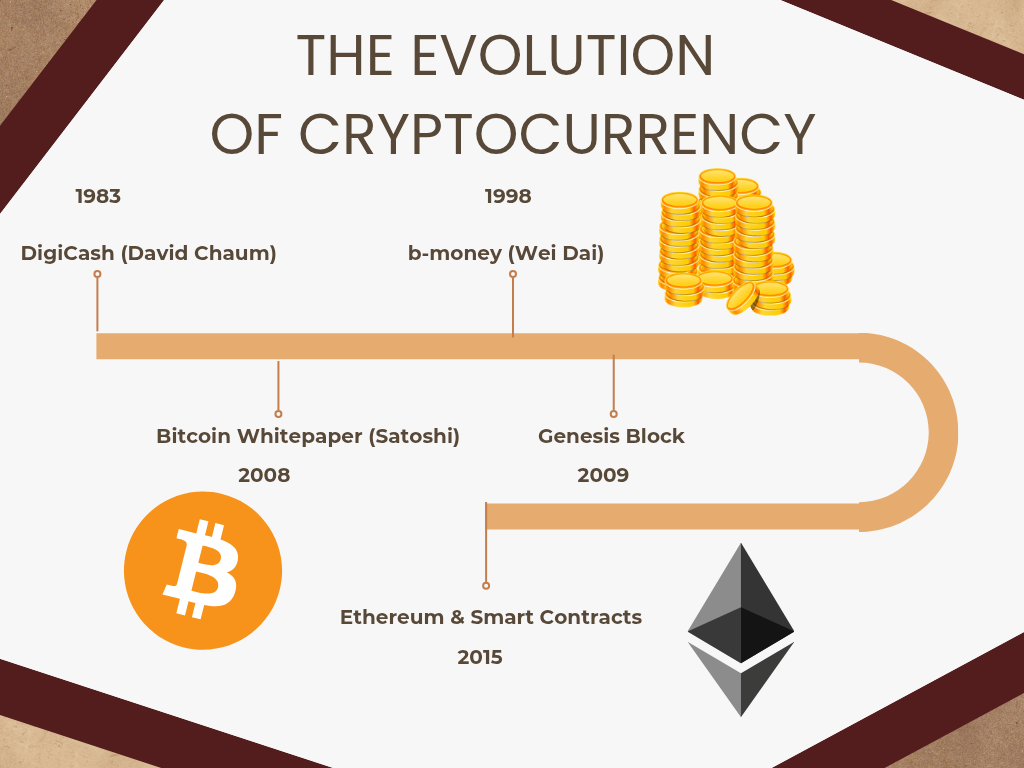
- David Chaum: In 1983, he created DigiCash, one of the first attempts at an anonymous electronic money system.
- Wei Dai: In 1998, he published a proposal for “b-money,” an anonymous, distributed electronic cash system. He is widely credited with coining the principles that would later form the foundation of cryptocurrency.
- Nick Szabo: In the late 90s, he introduced “Bit Gold,” which proposed a decentralized currency where participants expended computational power to solve puzzles, a direct predecessor to Bitcoin’s “Proof of Work” mechanism.
The Birth of Bitcoin & Satoshi Nakamoto
The true turning point arrived in October 2008, when a person or group using the pseudonym Satoshi Nakamoto published the famous whitepaper: “Bitcoin: A Peer-to-Peer Electronic Cash System.”
On January 3, 2009, Nakamoto mined the Genesis Block—the very first block of the Bitcoin blockchain. Embedded in the code of this block was a headline from The Times of London: “Chancellor on brink of second bailout for banks.” This was a clear political statement against the flaws of traditional central banking. Bitcoin was born not just as a currency, but as a protest against the systemic failures exposed by the 2008 financial crisis.
How Blockchain Works: The Engine of Trust
To understand why cryptocurrency works, you must understand the blockchain. Think of it as a shared digital spreadsheet that everyone can see but no one can cheat.
- Decentralization: There is no “master server.” Thousands of computers (nodes) around the world hold a copy of the entire ledger.
- Cryptography: Every transaction is encrypted. This ensures that only the rightful owner of a digital asset can spend it.
- Proof of Work/Stake: These are “consensus mechanisms.” They are the rules that allow the network to agree on which transactions are valid, preventing “double-spending” without needing a bank to act as an intermediary.
The Evolution: From Bitcoin to Altcoins & DeFi
Following Bitcoin’s success, the market exploded with “Altcoins” (alternative coins). The most significant development was the launch of Ethereum in 2015 by Vitalik Buterin.
Ethereum introduced Smart Contracts—self-executing contracts with the terms of the agreement directly written into code. This gave rise to DeFi (Decentralized Finance), a system that allows users to borrow, lend, and trade assets without traditional banks, all powered by automated algorithms. We are now seeing the integration of NFTs (Non-Fungible Tokens) and DAO (Decentralized Autonomous Organizations), proving that blockchain is more than just money—it is a new internet architecture.
Risks and Challenges
Despite the innovation, the crypto space is not without danger:
- Volatility: Cryptocurrency prices can swing dramatically within hours. It is a high-risk asset class.
- Regulatory Uncertainty: Governments worldwide are still struggling to decide how to tax or regulate digital assets.
- Security: Because crypto is “trustless,” the responsibility lies entirely with the user. If you lose your Private Keys (the password to your digital wallet), you lose your funds forever. There is no “forgot password” button in decentralized finance.
Essential Security Tips for Beginners
If you are entering the world of cryptocurrency, your safety must be your top priority:
- Use Cold Wallets: Store your assets on offline hardware wallets rather than keeping them on exchanges.
- Never Share Your Seed Phrase: Your seed phrase is the “master key” to your wallet. If anyone asks for it, it is a scam.
- Do Your Own Research (DYOR): Never invest based on hype or social media trends. Understand the project’s utility and the team behind it.
- Use Two-Factor Authentication (2FA): Always enable 2FA on any exchange account you use.
The Future Outlook & Conclusion
The journey of cryptocurrency is still in its infancy. From its origins in the privacy-focused Cypherpunk movement to its role in modern decentralized finance, it has already proven its resilience.
We are moving toward a future where digital assets are integrated into the global economy, potentially offering financial inclusion to the billions of people worldwide who currently lack access to traditional banking services. Whether it becomes the primary global currency or remains a digital store of value, one thing is certain: the technology behind it—blockchain—has permanently altered the trajectory of human innovation.
References & Further Reading:
- Nakamoto, S. (2008). Bitcoin: A Peer-to-Peer Electronic Cash System. bitcoin.org.
- Dai, W. (1998). b-money. weidai.com.