The Ultimate Guide to Crypto Wallets and Digital Security : How to Protect Your Cryptocurrency Assets
After exploring how blockchain technology works as the foundation of our digital future and understanding the history and trends of digital money, there is one crucial step every beginner must take before diving deeper: Learning how to secure those digital assets.
In the traditional banking system, a bank acts as a trusted third party that safeguards your money. If you forget your password or lose your ATM card, you can simply visit a local branch with your ID card to restore access to your funds. However, in the world of cryptocurrency and blockchain, the core philosophy is decentralization. This means you are your own bank.
Before we explore how to secure your digital assets, it is important to understand the fundamental technology behind them. If you haven’t already, please read our comprehensive guide on the History, Technology, and Future Trends of Cryptocurrency.
This financial freedom comes with significant responsibility. The blockchain itself might be unhackable, but the way you store your access to it can be vulnerable. This comprehensive guide will dive deep into what a crypto wallet is, the different types of digital wallets, how cryptographic keys work, and the absolute best practices to protect your cryptocurrency portfolio from hackers, scammers, and irreversible mistakes.
Why Cryptocurrency Security is Fundamentally Different
Blockchain systems—like the Bitcoin or Ethereum networks—are inherently secure. The cryptographic architecture making up these networks has never been directly “hacked” in a way that breaks the underlying math. When you hear news stories about millions of dollars in crypto being stolen, it is rarely a failure of the blockchain itself. Instead, it is usually due to user negligence, phishing scams, or security vulnerabilities on third-party platforms like centralized exchanges.
In the crypto space, ownership of an asset is proven through a secret mathematical code known as a Private Key. Whoever controls this private key has total, absolute control over the coins associated with it. Therefore, the biggest challenge in the crypto world is not securing the blockchain, but keeping your private keys a total secret. This is exactly where crypto wallets come into play.
What is a Crypto Wallet?
Contrary to what the name suggests, a crypto wallet does not actually store your coins inside it. Your Bitcoin, Ethereum, and other digital assets exist only as data entries on their respective decentralized blockchains.
So, what does a wallet actually do? A crypto wallet is a software program or physical hardware device that stores your Public Keys and Private Keys. It serves as an interface or a bridge that allows you to interact with the blockchain network. Through your wallet, you can view your real-time balances, send transactions, and receive cryptocurrency from others.
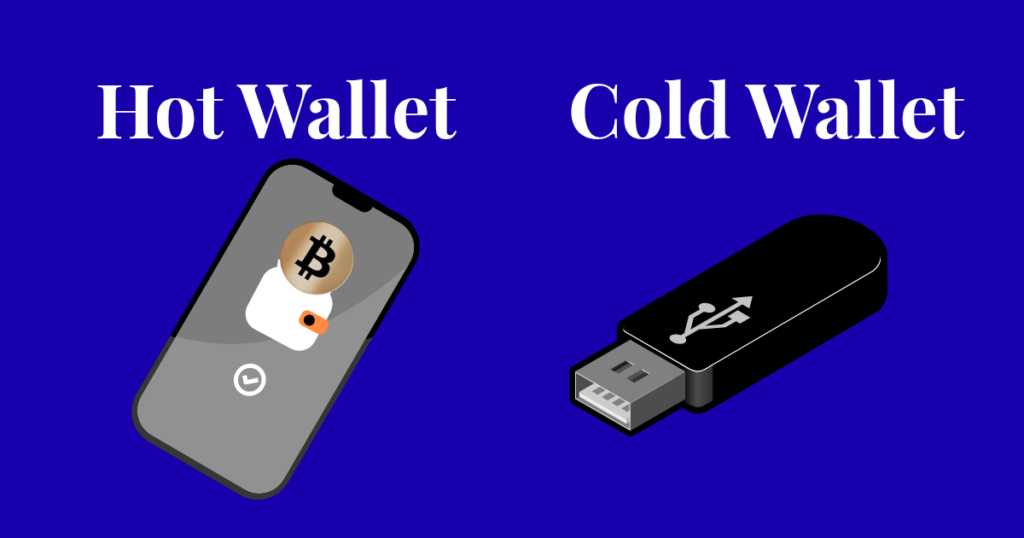
Broadly speaking, crypto wallets are divided into two main categories based on their connectivity to the internet: Hot Wallets and Cold Wallets.
1. Hot Wallets (Internet-Connected Wallets)
A hot wallet is a cryptocurrency wallet that is always or frequently connected to the internet. These usually take the form of smartphone applications, web browser extensions, or desktop software.
- The Pros: Hot wallets are highly convenient, incredibly user-friendly for beginners, and perfect for daily transactions. Most of them are also completely free to download and use.
- The Cons: Because they are connected to the internet, hot wallets are inherently more vulnerable to cyberattacks, malware, and sophisticated phishing attempts.
- Popular Examples: MetaMask, Trust Wallet, Exodus, and built-in wallets on centralized exchanges like Binance, Coinbase, or Kraken.
A Crucial Note on Exchange Wallets: If you simply leave your purchased coins on a centralized exchange, you are using a custodial wallet. This means the exchange holds the Private Keys on your behalf. There is a famous saying in the crypto community: “Not your keys, not your coins.” If that exchange goes bankrupt, halts withdrawals, or gets hacked, you could lose your entire investment.
2. Cold Wallets (Offline Storage)
A cold wallet, frequently referred to as a hardware wallet, is a physical device (often resembling a USB thumb drive) designed to store your Private Keys offline.
- The Pros: They offer the highest level of security available. Because your Private Keys never touch an internet-connected device, your assets are virtually immune to remote computer hackers, malicious smart contracts, or malware.
- The Cons: They are less convenient for making quick, daily trades. They also cost money (ranging from $50 to $200+), and there is a physical risk of losing or breaking the device (though funds can still be recovered).
- Popular Examples: Ledger Nano X, Trezor Model T, and SafePal S1.
Understanding the Cryptography: Public Keys, Private Keys, and Seed Phrases
To truly master crypto security, you must familiarize yourself with these three foundational terms:
- Public Key & Wallet Address: Think of your Public Key as your bank account number. You can (and must) share your Public Key, or its shortened version called a Wallet Address, with others when you want to receive funds. Sharing your public address is completely safe; no one can steal your funds just by knowing where to send them.
- Private Key: If the Public Key is your account number, the Private Key is your ATM PIN and online banking password combined. It is a massive, complex string of alphanumeric characters. Your Private Key is used to “sign” and authorize every outgoing transaction from your wallet. You must never share your Private Key with anyone, under any circumstances.
- The Seed Phrase (Recovery Phrase): Because a raw Private Key is too complex for a human to memorize, developers created a system called the Seed Phrase (or Recovery Phrase). A Seed Phrase translates your complex private keys into a readable list of 12 to 24 random English words. Your Seed Phrase is the “Master Key” to your digital wealth. If your computer crashes, your smartphone is stolen, or you lose your hardware wallet, you can completely recover all your crypto assets on a brand-new device simply by typing in those exact 12 to 24 words in the correct order.

The Biggest Security Threats in Web3
To protect your portfolio, you need to know what enemies you are facing. Here are the most common threats in the crypto ecosystem:
- Phishing Sites: Scammers build fake websites that look exactly like popular wallets or exchanges. When you try to log in and accidentally enter your Seed Phrase on their site, they instantly drain your wallet.
- Malware & Clipboard Hackers: Malicious software can quietly monitor your computer. Some viruses are designed to detect when you copy a crypto address and automatically paste the hacker’s address instead. Always double-check the first and last four characters of an address before sending.
- Social Engineering: Scammers often lurk in Telegram, Discord, or Twitter (X), posing as “Customer Support Admins.” They will offer to help you fix a failed transaction, eventually asking you to “validate your wallet” by handing over your Seed Phrase. Remember: Real tech support will never ask for your Seed Phrase.
Best Practices to Keep Your Crypto Bulletproof
Now that you understand the theory, let’s apply it. Follow these strict security protocols to ensure your digital wealth remains untouchable:
- Write Your Seed Phrase on Physical Paper: When creating a new wallet, write your 12-24 word Seed Phrase on a piece of paper with a pen. Never take a screenshot of it on your phone. Never type it into a cloud-based note app like Evernote or Google Keep. Never email it to yourself. Keep the paper in a fireproof safe or a highly secure location.
- Implement the 80/20 Diversification Rule: Do not keep all your crypto eggs in one basket. Many investors use a strategy where they hold 80% of their long-term investments in an offline Cold Wallet locked safely away. The remaining 20% is kept in a Hot Wallet for daily trading or experimenting with DeFi protocols.
- Enable Robust Two-Factor Authentication (2FA): If you use centralized exchanges, you must enable 2FA. However, avoid SMS-based 2FA, as hackers can trick telecom operators into transferring your phone number to their SIM card (a SIM-Swap attack). Instead, use dedicated authenticator apps like Google Authenticator or Authy.
- Always Send a Test Transaction: Blockchain transactions are immutable. If you mistype a single character in the destination address, your money is gone forever. Get into the habit of sending a tiny “test amount” first. Once you confirm the test amount arrived safely, send the rest of the larger sum.
Conclusion
Blockchain technology has opened the gates to a decentralized financial future where trust is placed in mathematics rather than traditional institutions. However, removing the middleman means you carry the absolute responsibility of safeguarding your assets. Choosing the right type of crypto wallet, understanding the mechanics of public and private keys, relentlessly protecting your Seed Phrase, and staying vigilant against social engineering are non-negotiable skills for any crypto investor. Start your journey with security first, and become the ultimate guardian of your own digital wealth.